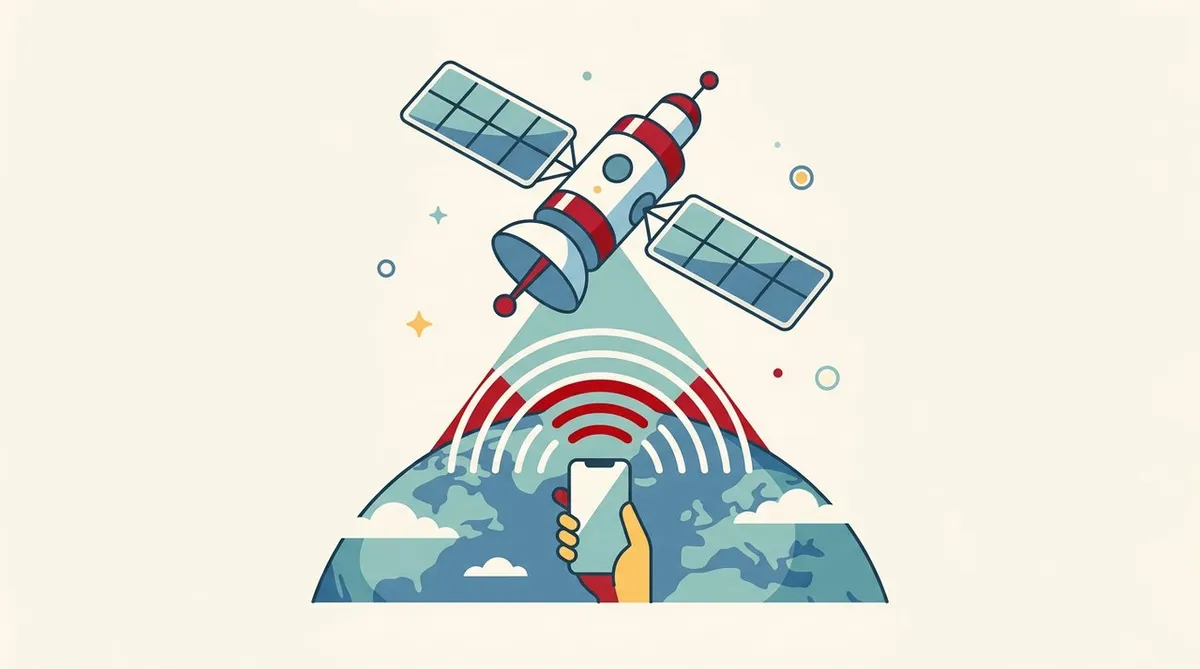
“SpaceX is apparently entering the mobile phone business.”
Reading only the headline, that’s a surprise, isn’t it? It was for me.
But the content of the article turned out to be a bit more specific. The keys are “the 800MHz band” and “D2D.”
I’ll sort it out within the scope of the Keitai Watch article (October 9, 2026, by Jun Shimada).
Bottom line
- It was reported that SpaceX announced it had agreed to buy nationwide 800MHz-band licenses in the US held by the US investment firm Grain Management
- The article explains that the purpose is preparation for D2D (Direct-to-Device) communication, where satellites and smartphones connect directly
- There is a lot not written in the article. The amount, the timing, the form of the service (whether it will become a mobile carrier itself or partner with others), the impact on Japan, and so on
The headline’s “entering the mobile business” is probably best read, at this point, as “they have secured the radio waves (frequencies) for it.” (This is my reading.)
What the article says
- US-based SpaceX agreed to buy the nationwide 800MHz-band licenses held by Grain Management
- It is buying the 800MHz band usable for mobile phones in the US, and will move forward with preparations for D2D, where satellites and smartphones connect directly
- SpaceX provides an internet service via satellites
What the article does not say
- The purchase price, the amount of spectrum to be acquired, and when the contract will be completed
- Whether approval from regulators is required, and where that stands
- The service launch date, pricing, and form of provision
- Compatible devices and details of the satellites to be used
- The impact on rollout in Japan
The body of the article does not mention Japan or Japanese mobile carriers. This is not a story about becoming usable on smartphones in Japan.
What is “D2D” in the first place?
Most satellite communication today requires a dedicated antenna (a dish). The kind you point at the sky on a mountaintop or aboard a ship.
D2D is a mechanism where, without that antenna, an ordinary smartphone connects directly to a satellite.
As an analogy, satellite communication so far has been a “dedicated radio.” D2D is “connecting to a base station in the sky with the phone you always use.”
It is expected to help in mountains, remote islands, and at sea, where it is easy to lose service, and as a backup during disasters.
The basics of satellite communication are in the introductory article on low-orbit satellites (Starlink).
Why “the 800MHz band”?
This part is about the mechanism. (It is not content written in the article, but an explanation of general properties of radio waves.)
Radio waves have a property that the lower the frequency, the farther they reach and the better they handle walls and obstacles.
- Low frequencies (such as 800MHz): They reach far. They also get into buildings easily. However, the range of data they can carry tends to be narrow
- High frequencies (such as millimeter wave): They can carry large amounts of data. However, they don’t reach far and are easily blocked
It’s the same reason that the 700 to 900MHz band, called the “platinum band” in Japan, is talked about as the trump card for easy connectivity. Details are in the explanation of the platinum band.
Satellites are far up in the sky. The distance to the phone is long, so a low frequency that reaches far tends to be advantageous. Thinking that is the reason for securing the 800MHz band is natural. (This is my view; there is no statement that SpaceX gave a reason.)
On the opposite side is millimeter wave. It’s interesting that even though both are “radio waves,” their roles are the exact opposite.
How does this relate to smartphone users in Japan?
From the article, the direct relevance can’t be determined.
But there are points that offer hints for thinking.
- Direct communication between satellites and smartphones is becoming a real story as a means of “eliminating no-service areas”
- Frequencies (radio bands) are allocated by country and by regulatory system. A purchase in the US does not mean it can be used in Japan as is
This article does not cover the moves of Japanese mobile carriers or the system in Japan. That’s because I haven’t been able to confirm them.
What you can do now
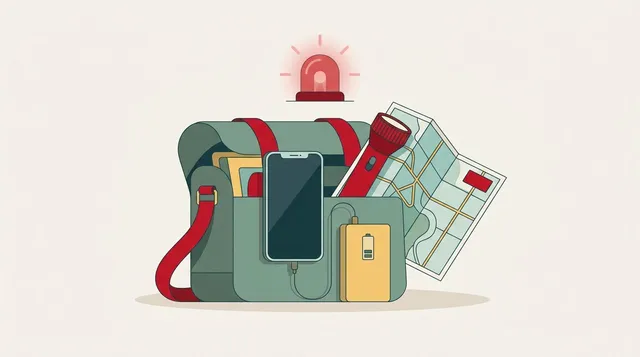
If seeing news like this makes you think “I’m also worried about losing service,” start with preparations at hand.
- Before going to the mountains or remote islands, download offline maps
- Have multiple means of contact
- Preparations for disasters are summarized in this article
Summary
- It was reported that SpaceX agreed to buy US 800MHz-band licenses
- The article explains that the aim is preparation for D2D communication, where satellites and smartphones connect directly
- The amount, timing, form of the service, and impact on Japan are not written in the article
- Low frequencies tend to reach far. The reason they suit satellite communication can be reasoned from the mechanism (my view)
The headline looks big, but for now it’s at the “preparation” stage. When follow-up reports come out, I’ll follow them within what is written.
Source: Keitai Watch “SpaceX to Enter the Mobile Business by Buying 800MHz Band in the US” (October 9, 2026) https://k-tai.watch.impress.co.jp/docs/news/2147234.html
This article contains affiliate advertising. If you apply for a product or service through links on this site, we may receive compensation from partner companies. Additionally, the operator is an employee of Rakuten Group and may receive compensation through an employee referral program. Article content and evaluations are based on the operator's actual experience and research, regardless of advertising. For details, see the Disclaimer & Affiliate Disclosure. Disclaimer & Affiliate Disclosure
This article contains machine translation. For official terms, please refer to the multilingual pages on the official Rakuten Mobile website.
If you have concerns about Rakuten Mobile's coverage area or signal conditions, you can inquire through the official signal improvement survey request form .